
In-Home Care for a Loved One with Dementia
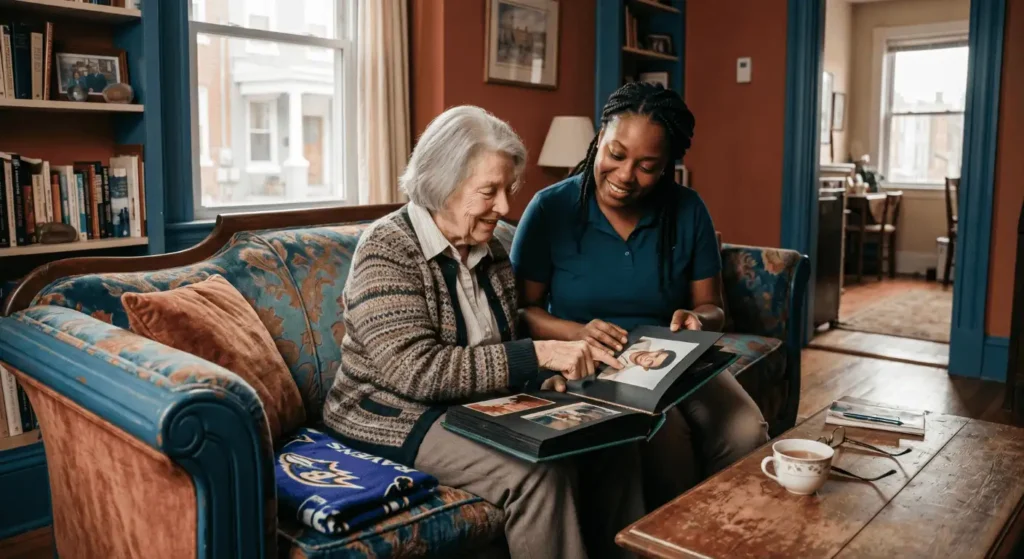
When someone you love is living with dementia, the questions come fast, and they don’t stop. Is it safe for them to be home alone? What kind of help do they actually need? How will they respond to a caregiver? And when is the right time to ask for support?
There are no perfect answers. But there’s a lot that families can do to make daily life safer, more consistent, and less exhausting for their loved one and for themselves.
This month is Alzheimer’s & Brain Awareness Month. According to the Alzheimer’s Association’s 2026 Facts and Figures report, an estimated 7.4 million Americans age 65 and older are living with Alzheimer’s disease, which is the most common form of dementia. Millions more family members and unpaid caregivers are providing daily support, often while managing work, family responsibilities, and their own health.
That’s an enormous weight for families to carry. In-home professional care doesn’t remove that weight entirely, but it can make it manageable.
Understanding Dementia and Daily Care Needs
Dementia is not a single disease. It’s an umbrella term for conditions that affect memory, thinking, behavior, and the ability to perform everyday tasks.
In the earlier stages, someone may still be mostly independent but need reminders, companionship, and safety supervision. As dementia progresses, support may be needed with bathing, dressing, meals, medication reminders, and safe movement around the home.
Families often tell us that the needs changed faster than they expected.
What In-Home Dementia Care Can Include
In-home dementia care is a daily human presence: a consistent caregiver who knows your loved one and helps them navigate the day with dignity.
At Esther’s Home Care, that care might include:
- Help with bathing, dressing, grooming, and personal hygiene.
- Meal preparation and hydration reminders.
- Medication reminders to prevent missed or doubled doses.
- Companionship, conversation, walks, and familiar activities.
- Safety supervision, including awareness of wandering and fall risk.
- Transportation to appointments or errands.
- Regular family updates.
What makes this support meaningful isn’t any single task. It’s the consistency. A caregiver who knows how your mother likes her coffee, who understands that your father gets anxious in the late afternoon, who notices when something feels different before anyone else does. That kind of relationship changes everything.
Why Consistent Caregivers Matter
For people living with dementia, routine is not just a preference. It is a form of safety. Familiar faces, familiar sequences, and familiar environments reduce confusion, agitation, and fear.
This is one of the most important things families can look for when choosing in-home care: not just skill, but consistency. Will the same caregiver show up? Will the schedule be predictable? Will my loved one get to know this person?
Rotating caregivers, last-minute substitutions, and unpredictable scheduling all increase stress for someone with dementia and for the families watching over them. At Esther’s Home Care, we match clients with a dedicated caregiver and build care around a reliable schedule. Structure matters.
Why Families Often Wait Too Long to Start Dementia Care
Two of the most common mistakes families make when arranging dementia care are waiting too long and taking on too much alone.
The waiting is understandable. Families hope things will stabilize, worry their loved one will resist help, or feel that asking for support means giving something up.
But early, consistent support usually goes better than help introduced during a crisis. When a person becomes accustomed to a caregiver before a fall, hospitalization, or major decline, the adjustment is often smoother.
As for taking on too much: the numbers tell the story. Family caregivers of people with dementia report significantly higher rates of stress, physical health problems, and burnout than caregivers of people with other conditions. Research from the National Institutes of Health shows that dementia caregivers who receive 20 or more hours of paid professional support per week report measurably less strain and are less likely to say they have more to handle than they can manage.
Getting help is not giving up. It is what makes it possible to keep going.
How Esther’s Home Care Approaches Dementia Support
Esther founded this agency in Baltimore in 1999, and dementia care has been part of the work from the beginning. Over the years, she has supported families from the early days of a diagnosis through later stages when daily structure and supervision matter most.
One lesson has stayed consistent: families usually do better when they secure trustworthy support before the situation becomes unmanageable.
A few things that shape how we work:
- Caregiver matching: We pair clients with caregivers based on personality and temperament, not just availability.
- Predictable scheduling: We build care around a consistent routine and familiar caregiver whenever possible.
- Family communication: We keep families updated when appetite, mood, behavior, or safety concerns change.
- RN oversight: An RN is part of our team, helping guide care as needs change.
- Medicaid and long-term care insurance accepted: We help families explore available payment options.
When to Start Thinking About In-Home Dementia Care
Common signs it may be time to consider in-home dementia care include:
- Your loved one is no longer safe to be left alone for extended periods.
- Daily tasks like bathing, dressing, or preparing meals have become difficult or inconsistent.
- Medications are being missed or taken incorrectly.
- You are providing care yourself, but it is affecting your health, your work, or your relationships.
- A recent hospitalization, fall, or health event has changed the situation.
- Your loved one is becoming more isolated or withdrawn.
If any of the above sound familiar, it is worth having a conversation. Not a commitment, just a conversation. We can help you think through what support might look like, what level of care makes sense, and how to start.
A Final Note for Family Caregivers
If you are the one holding everything together—managing medications, attending appointments, getting up at night, handling the worry and the grief alongside the care—please know this: what you are doing is enormous. And it is okay to ask for help.
In-home care is designed to support you, not replace you. It gives your loved one a consistent, qualified presence and gives you back the time and energy to be the son, daughter, spouse, or partner you want to be, not just the caregiver.
We serve adults of all ages across Baltimore City, Baltimore County, Catonsville, and Pikesville. If you’d like to talk about what support could look like for your family, we’re here.
Call us at 443-522-1535 or send us a message.